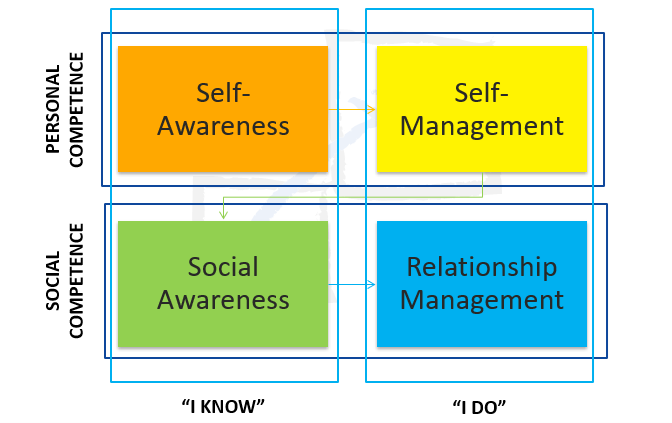

W– stands for “what is it?” What is the idea of emotional intelligence? How do we define it?
H– stands for “how do I do it?” (could be how do I apply it, how do I get better at it, how do I grow it – that sort of depends on the topic. With emotional intelligence, we are looking at how do I get better at this. How can I apply emotional intelligence to my day-job?
A– stands for “avoiding common pitfalls” . There are some pretty easy pitfalls when learning a new skill. When you first get a hammer, you start to see everything as a nail. So avoiding common pitfalls for a course about hammer wielding might include a tip on the fact that not everything is a nail.
T– stands for “tools and techniques”. To learn more about emotional intelligence and how to use the W.H.A.T. format, feel free to attend a session with Faye.
We’ve all heard that gratitude is good for us. And we know that expressing gratitude to other people and the things we are thankful for should be part of our daily routine. But chances are, someone reading this note is busy, and it may be tricky to introduce something new like this. Since we know that gratitude makes workdays better (for you and others!), and reaping the benefits of gratitude will be easier if it’s, well, easier to practice gratitude in the first place, here are a handful of practical, tactical steps in gratitude you can do right now, as well as the outcomes you can expect from each.

Five Ways to Express Your Gratitude:
Sometimes we find ourselves in situations where we need to motivate our colleagues. We may not have any actual authority or influence over them, but we still need to persuade them. Likely, we’ve all been there before. Maybe your team member has a responsibility that they haven’t taken yet. It could be a situation where you feel like you’ve asked someone else to do something 17 times and the dumb thing still isn’t done. It could be a situation where you’re working with someone in a fairly new relationship and you really don’t know how to motivate them to do something. So, how the heck do we get them to do the thing? Here are three quick tips:

However, sometimes we simply need to ask for things. This could be a favor, help, or even information. Whatever the case may be we want to make sure we are clearly communicating our questions. Here are 10 simple steps to help us ask better for things.
On the other hand we may be needing to answer someone or something (email, text, question, phone call), with a "no". But how do we do this in an effective and sensitive way? Two things you do not want to do is disappear (ghost someone) and you don't want to say "yes" knowing the answer is "no".
This is how you should say "no":
Dealing with people can be difficult. There will be days where you yourself are not having it or those around you seem like they are determined to make any and every interaction you have with them completely unproductive. Whenever this happens, arm yourself with information and tools to move that person and the project forward. There are some common issues that we all deal with at work that are really frustrating:
Check out Take Two for some helpful solutions to these common challenges.

Focusing can be another challenge for many people in the work place. Between the 25 internet tabs, 3 Word docs, Teams chat, Slack channel, Facebook feed, text messages, TikTok notifications, our amazing but overly chatty coworker, and the buzzing of the water cooler down the hall, we experience a little…ok a lot of noise throughout our days. And productivity dwindles. In an effort to help us regain power over our focus and be more productive, here are a few tips and tricks on how to stay focused and finish the task at hand.

A recent Harvard Business Review article indicated that high-performing teams do these five things differently: phone calls, meetings, relationship building, appreciation, and authenticity. We’ve known for years that meeting management and appreciation are frequent characteristics of high performing teams. And our class dedicated to creating safe, healthy, high-performing teams includes authenticity as a make-or-break characteristic of a healthy team. One of the findings pointed to team members communicating in ways that achieve the goals, even when it’s hard - which resonates with our communication principles. But how do you help your team be a more highly effective team?
Try to finding solutions to these prompts...

Work and life in general can be stressful sometimes. Maybe you have a family member, friend, or colleague that disagrees on a certain topic and isn’t quiet about it. Maybe you have an important work deadline coming up. Or maybe you have a lot on your plate with little time or little help.
Here are five ways to keep the peace, wherever you may be.

The constant buzz of pandemic concerns and conversations is not letting up, but I wonder how many have simply become desensitized to the topic, how many have reached the end of their tolerance for the current level of ambiguity and distress. Probably at least a handful - either of those reading this, or those you know and work with. I keep hearing people talk about getting back to “normal”. Will we see “normal” again? Was our previous “normal” always a good thing? I’m not sure that the answer to either of those is quite that simple. Here's what I offer, though, as we explore “normal”.